Uncovering What Soil Buried Over Time
Root Flare Air Spade Exposure in Fairview for trees planted too deep or buried by grade changes
Soil piled against the trunk base creates conditions where bark tissue designed for air exposure remains in constant contact with moisture and organisms that break down buried wood. Advanced Tree & Shrub Care, Inc uses compressed air tools to excavate soil from around the root flare without damaging the roots themselves, exposing the transition zone where the trunk meets the root system. Trees throughout Fairview often suffer from this issue when construction adds fill dirt, mulch accumulates over years, or nursery stock arrives planted below the proper depth from the beginning.
Air spading directs high-velocity air into the soil, breaking apart compacted material and blowing it away from the root zone while leaving roots intact. The process reveals girdling roots, decay at the trunk base, and the natural flare structure that should be visible at ground level. Exposing this area reduces stress on the tree by restoring proper oxygen exchange and eliminating the chronic moisture that leads to fungal infection and cambium death.
Schedule a root zone evaluation to determine whether buried flare tissue is contributing to your tree's decline.
What You Notice Once Root Flares Are Exposed
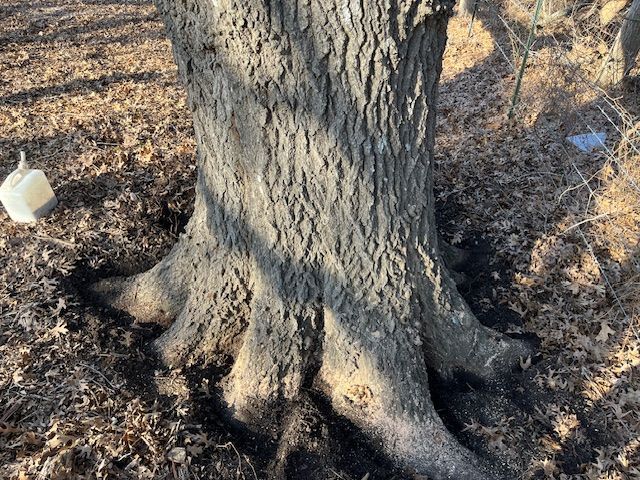
The excavation process removes soil in controlled passes, starting several feet from the trunk and working inward until the flare structure becomes visible. Arborists adjust air pressure and nozzle distance based on soil type, using lower pressure in sandy soils and higher pressure in clay-heavy material common to the Fairview area. The process typically uncovers six to twelve inches of buried trunk tissue, along with any roots that have circled the base or grown back toward the stem.
After exposure, the trunk base widens visibly where it meets the ground, resembling the natural buttress structure seen in healthy forest trees. The bark at the flare dries out and hardens, transitioning from the soft, discolored tissue that results from burial to the normal texture of aerial bark. Trees often respond with improved growth in the following seasons as the restored root flare allows better nutrient transport and reduces the energy the tree spent trying to compartmentalize the buried zone.
The service includes removing any girdling roots discovered during excavation and backfilling the area with properly graded soil that slopes away from the trunk. Mulch is applied in a thin layer several inches away from the flare rather than piled against the bark.
Answers to Frequent Service Questions
Property owners want to know how deep excavation goes, whether the process harms roots, and what changes to expect after the flare is exposed.
How does air spading avoid damaging the roots?
The air stream breaks apart soil particles but doesn't cut through fibrous root tissue because roots are flexible and simply move with the air current. This makes it significantly safer than mechanical digging, which severs roots indiscriminately when shovels or machinery contact them.
What if the tree was planted too deep from the start?
Excavation reveals the original root flare, and soil is removed until the uppermost structural roots are visible at or just below grade. If the tree was planted multiple feet too deep, it may not be feasible to expose the entire flare without creating a pit that collects water, in which case the excavation goes as deep as drainage allows.
Why do trees decline when the root flare is buried?
Bark tissue at the flare lacks the corky protective layers found on true root tissue and can't resist the fungi and bacteria present in soil. Burial keeps this area moist, allowing pathogens to colonize the cambium and slowly girdle the trunk from the base upward, cutting off nutrient flow between roots and canopy.
When should root flare exposure happen relative to other treatments?
It's typically done before fertilization or pest management efforts because a buried flare limits the tree's ability to use nutrients effectively and makes it more susceptible to secondary stressors. Advanced Tree & Shrub Care, Inc often combines this service with mulch correction and soil amendments to address multiple stress factors simultaneously.
Can exposed root flares be re-buried if they look unattractive?
Re-burying the flare reintroduces the same stress conditions that caused decline, so the exposure must remain permanent. Landscaping adjustments such as groundcover plantings around the flare or decorative stone can improve aesthetics without covering the trunk base.
Advanced Tree & Shrub Care, Inc evaluates soil depth, root health, and flare condition before starting excavation to confirm the service will benefit the tree. Request an inspection to assess whether your tree shows symptoms of buried flare stress and determine the appropriate excavation depth.