Removals That Protect People and Property
High Risk Tree and Limb Removal in Fairview for trees near structures, power lines, or areas with limited access
Trees leaning over rooflines, limbs entangled in utility lines, or trunks positioned between buildings create scenarios where standard removal methods introduce unacceptable risk. Advanced Tree & Shrub Care, Inc handles removals where the margin for error is measured in inches, using rigging systems, sectional dismantling, and controlled lowering techniques to bring down wood without damaging what sits below. Properties in Fairview often present these challenges due to mature tree canopies that developed before construction filled in around them.
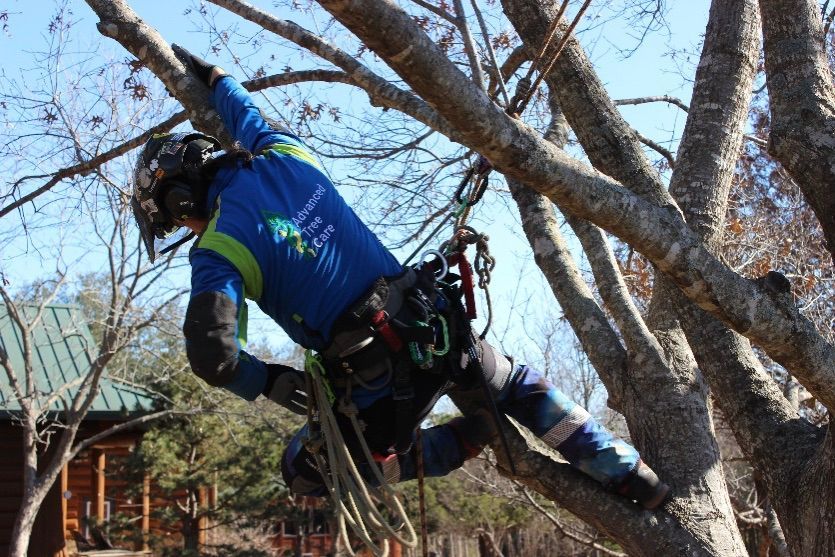
This work involves calculating load weights, selecting anchor points in the tree or on the ground, and using ropes and pulleys to control the descent path of each section as it's cut. Climbers position themselves to make precise cuts while tied into separate anchor points, ensuring they remain secure even if the section being removed shifts unexpectedly. Ground crews manage taglines to prevent cut sections from swinging into structures or fences as they're lowered.
Arrange an on-site assessment to identify the specific hazards and determine the rigging approach required for safe removal.
How High Risk Removal Addresses Complex Situations
The process begins with a detailed evaluation of the tree's lean, the proximity of obstacles, the condition of the wood, and the available space for crew and equipment. Arborists identify which sections of the tree must be removed first to reduce weight and shift the center of gravity away from structures, then plan the rigging setup to control each cut. Specialized equipment includes friction devices that allow controlled rope feeding, pulleys rated for the load, and slings that distribute pressure without crushing the wood.
Once the work is complete, you'll notice the roof, fence line, or driveway that was previously beneath the tree is clear and undamaged, with all wood debris removed and the stump ground or cut flush depending on what you specified. The area no longer presents the constant concern of limbs dropping during storms or the tree failing at the base during high winds. Neighboring trees that were previously shaded or crowded now receive more light and space to expand their canopies.
This service requires liability insurance, trained climbers with current certifications, and equipment that's inspected regularly for wear. It's distinct from standard tree removal, which assumes open space around the tree and straightforward felling cuts.
What Property Owners Usually Ask
Questions about timeline, equipment access, and what qualifies as high risk removal come up frequently during consultations.
What makes a removal high risk compared to standard tree work?
High risk designation applies when the tree is within falling distance of structures, utilities, or valuable landscape features, when it's leaning severely or has structural defects, or when access restrictions prevent equipment from positioning safely. It also includes removals where the tree is entangled with other trees or has limbs that can't be dropped without rigging.
How is each section lowered without hitting the house?
Rigging systems use anchor points either in the tree being removed or in nearby trees, with ropes running through pulleys to control descent speed and direction. Ground crews apply tension to taglines that guide the section away from structures as it's lowered, and friction devices on the main rigging line allow operators to stop or slow the descent at any point.
What happens if the tree is too close for a bucket truck?
Climbers ascend using rope and saddle systems, positioning themselves to make cuts from within the canopy. Each section is rigged and lowered piece by piece, starting from the top and working down until the trunk is reduced to a height that can be safely dropped or removed in final sections.
Why does high risk removal cost more than standard tree work?
The labor is significantly more time-intensive due to rigging setup, the need for multiple crew members to manage ropes and ground operations, and the slower pace required to maintain control throughout the process. Specialized equipment and the higher insurance costs associated with complex removals also factor into pricing.
Can removals happen in tight spaces between buildings?
Advanced Tree & Shrub Care, Inc accesses confined areas by rigging over structures when necessary, using smaller equipment that fits through gates, or coordinating with property owners to temporarily remove fencing. The crew stages wood in sections small enough to carry out manually when machinery can't reach the work zone.
Advanced Tree & Shrub Care, Inc assigns trained professionals with rigging experience to every high risk removal project. Request a property evaluation to review the specific removal challenges and receive a detailed plan for safe execution.