When a Tree Becomes an Immediate Hazard
Emergency Tree Removal in Dallas for fallen trees, unstable trunks, or storm damage that threatens property and access
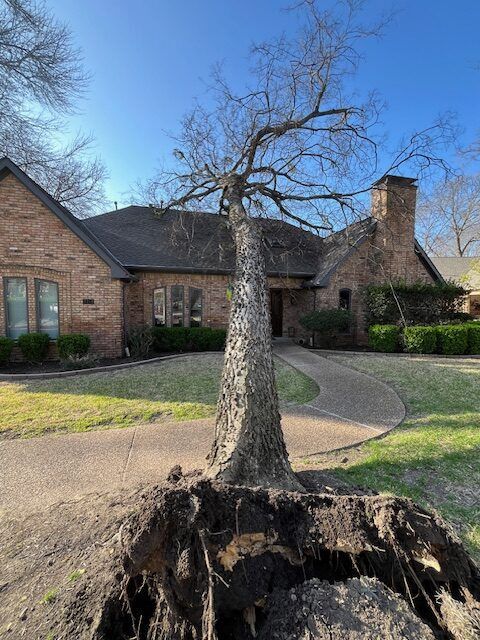
Advanced Tree & Shrub Care, Inc addresses urgent tree hazards across Dallas and surrounding North Texas communities when a tree falls, leans with exposed roots, or suffers structural failure that creates risk around homes, buildings, vehicles, or access routes. Severe thunderstorms and high winds affect this region throughout the year, and mature trees in established neighborhoods can fail suddenly when internal decay weakens the trunk or when saturated soil releases root systems during storm events. You notice the hazard immediately because the tree blocks a driveway, rests against a structure, or leans at an angle that makes collapse imminent.
The service involves safe removal of the compromised tree while protecting surrounding property, infrastructure, and landscape features. Structural failure often means the tree is under tension or compression, and cutting the wrong section first can cause sudden movement that damages nearby structures or injures workers. Emergency work prioritizes clearing access points, eliminating the immediate threat, and removing debris so property owners can resume normal use of the affected area.
Contact the company directly to report an urgent tree hazard and discuss the situation affecting your property.
What Emergency Tree Removal Actually Accomplishes
The work begins with assessing how the tree failed and what forces are acting on the trunk and limbs. A tree that has fallen onto a roof is still bearing weight and may shift if cut improperly, while a leaning tree with cracked roots can pivot unpredictably when tension is released. Rigging systems control the descent of heavy sections, and cuts are sequenced to manage the load so nothing drops uncontrolled or swings into structures.
After removal, the driveway is cleared, the roof is no longer supporting tree weight, and access routes are open again. The stump remains unless grinding is requested separately. Property owners regain use of the affected area, and the risk of further collapse or secondary damage is eliminated.
Emergency removal does not include routine cleanup of smaller branches unrelated to the hazard, and site conditions such as limited access, underground utilities, or proximity to power lines affect how the work proceeds. Trees in contact with electrical lines require utility company involvement before removal can begin.
What Property Owners Usually Ask
Situations involving fallen trees, damaged structures, or immediate safety concerns generate specific questions about how the work proceeds and what happens next.
What should I do if a tree falls on my house during a storm?
Contact your utility company first if power lines are involved, then call a professional tree service to assess the structural load and plan safe removal. Never attempt to cut a tree that is resting on a structure because tension and compression forces can cause sudden, dangerous movement.
How do I know if a leaning tree needs immediate removal?
A tree that has cracked roots, visible soil upheaval at the base, or a sudden lean after a storm is unstable and should be evaluated immediately. Trees in North Texas with shallow root systems are especially vulnerable after heavy rain saturates the soil and reduces anchorage.
What happens to the stump after emergency removal?
The stump remains in place unless grinding is scheduled separately. Emergency work focuses on eliminating the hazard and clearing access, and stump grinding is treated as a follow-up service once the immediate risk is resolved.
Can I wait until morning if a tree falls at night?
If the tree is blocking emergency access, resting on a structure, or near power lines, it should be addressed as soon as professional help is available. Waiting increases the risk of secondary damage from shifting weight or additional weather exposure.
What site conditions affect emergency tree removal?
Limited access for equipment, underground utilities, nearby structures, and proximity to power lines all influence how the work is done. Advanced Tree & Shrub Care, Inc evaluates these factors during the initial assessment to determine the safest removal approach.
Advanced Tree & Shrub Care, Inc handles urgent tree hazards across Dallas, Highland Park, University Park, and the broader North Texas region. Call the company directly when a tree failure creates immediate risk to property or access.