
Are Webworms on Pecan Trees Dangerous, and Should You Remove Them?
Webworms on pecan trees are usually not fatal to healthy, established trees, but they should not be ignored. Their caterpillars feed on leaves inside large silken webs, reducing the tree’s ability to produce energy. While a single infestation is often cosmetic, repeated or severe infestations can weaken pecan trees, reduce nut production, and make stressed trees more vulnerable to drought, disease, and other insect pests. According to Texas A&M Forest Service and Texas A&M AgriLife Extension, timely management helps minimize damage and protects long-term tree health.
Pecan trees are a valuable part of many landscapes, providing shade, beauty, and an abundant harvest year after year. At Advanced Tree and Shrub Care, Inc., we help homeowners identify insect problems early before they become larger issues. Our certified arborists understand the seasonal pests that affect pecan trees and use science-based recommendations to protect their health.
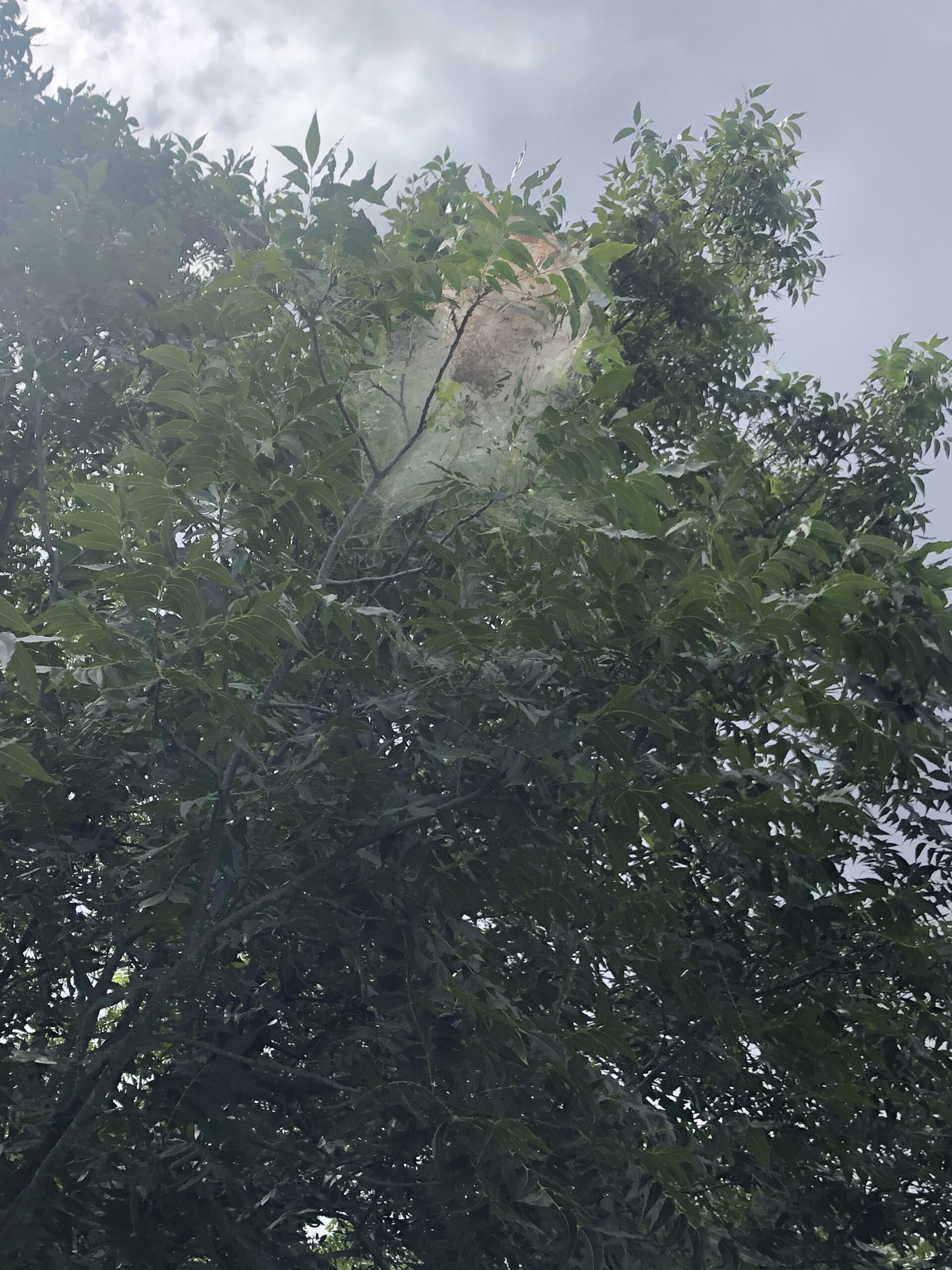
What do webworms look like on a pecan tree?
The easiest way to identify fall webworms is by their large, white, silky webs that surround the ends of branches.
Inside the webs, you’ll often find:
- Pale yellow or green caterpillars covered with white hairs
- Skeletonization of leaves
- Expanding webs that grow larger as the caterpillars feed
According to Texas A&M AgriLife Extension, fall webworms feed inside their protective webs, gradually enlarging them as they consume more foliage. They commonly attack pecan trees along with other species such as sugar berries, redbuds, etc.
Why do webworms prefer pecan trees?
Webworms are attracted to the tender foliage that pecan trees produce throughout the growing season. Webworms attack species of trees in the walnut family, mulberry family, elm family, etc.
Texas A&M AgriLife Extension reports that the final generation, usually appearing in late summer or early fall, is often the largest and causes the most noticeable damage.
Should You Remove Webworm Nests Yourself?
Yes, if the infestation is small and safely accessible.
Avoid burning the webs or using excessive pruning, which can cause unnecessary damage to the tree.
Texas A&M Forest Service notes that fall webworms have dozens of natural predators and parasites that often help keep populations under control once the webs are opened.
When should you call an arborist?
Professional treatment is recommended when:
- Webs are high in large trees.
- Multiple branches are affected.
- The infestation returns year after year.
- Your pecan tree already appears stressed.
- You want to protect nut production.
Professional arborists can determine whether treatment is necessary and recommend the safest, most effective management strategy.
How Are Webworms Treated Professionally?
Treatment depends on the size of the infestation and the condition of the tree.
A professional arborist may recommend:
- Careful pruning of heavily infested branches
- Mechanical removal of webs
- Insecticide applications only when justified by the severity of the infestation
- Ongoing monitoring throughout the season
Texas A&M AgriLife Extension emphasizes that many webworm populations decline naturally because of beneficial insects, making proper timing more important than routine pesticide applications.
Frequently Asked Questions
Do webworms come back every year?
They can. Fall webworms produce multiple generations each year, and if conditions are favorable, they may return seasonally. Monitoring your trees annually helps catch infestations early.
Will webworms reduce my pecan harvest?
Heavy infestations can reduce nut production because the caterpillars remove leaves that the tree needs to produce energy. Healthy trees usually recover, but repeated defoliation can affect future crops.
Protect Your Pecan Trees Before Webworms Spread
If you’ve noticed silky webs forming in your pecan trees, don’t wait until the infestation spreads across the canopy. The certified arborists at Advanced Tree and Shrub Care, Inc. can inspect your trees, identify the severity of the infestation, and recommend the most effective treatment plan to protect their long-term health.
Ready to protect your pecan trees? Contact Advanced Tree and Shrub Care, Inc. today to schedule a professional tree inspection.