Can a Sick Tree Be Saved? Signs an Arborist Looks For
Tree Health Warning Signs Every Homeowner Should Know
Trees add beauty, shade, and value to homes throughout North Texas, but they also face constant stress from drought, storms, pests, soil issues, and extreme temperature swings. Many homeowners in the Dallas area wonder the same thing when a tree starts declining: can a sick tree actually be saved?
In many cases, the answer is yes, especially when problems are identified early by a certified arborist. At Advanced Tree & Shrub Care, Inc., we help property owners diagnose tree health issues before they become dangerous or irreversible. Our team understands the unique challenges Texas trees face, from prolonged summer heat to storm damage and common regional diseases like oak wilt and root rot. We focus on preserving healthy trees whenever possible because mature trees are valuable investments that improve curb appeal, property value, and outdoor comfort.
Knowing the warning signs of a struggling tree can help you act quickly and avoid costly removal later. Here’s what certified arborists look for when evaluating whether a sick tree can recover.
Early Signs a Tree May Be in Trouble
One of the biggest misconceptions homeowners have is believing a tree will “bounce back on its own.” Trees often show subtle signs of stress long before severe decline becomes visible.
Some of the most common symptoms of a sick tree include:
· Dead or brittle branches
· Sparse canopies or delayed leaf growth
· Yellowing or browning leaves out of season
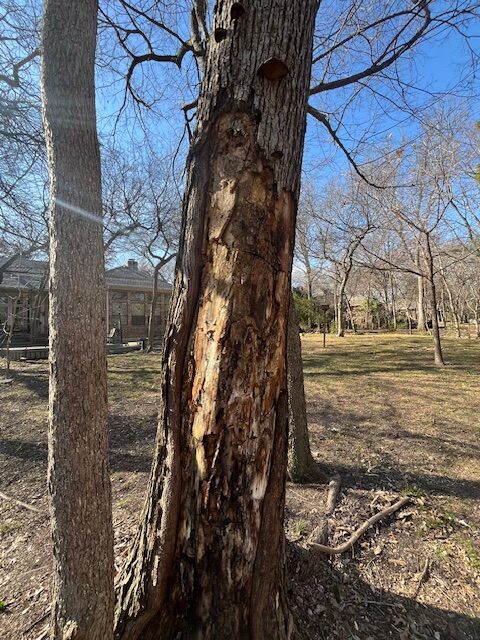
· Cracked bark or peeling bark
· Mushrooms growing near the base
· Leaning or sudden structural changes
· Insect activity or visible holes in the trunk
· Excessive limb drop
· Exposed or damaged roots
In North Texas, drought stress is one of the leading causes of declining tree health. According to Texas A&M Forest Service, prolonged dry conditions weaken trees and make them more vulnerable to insects and disease. Heat stress is especially common during long summers near the Dallas-Fort Worth area, where compacted soils and inconsistent watering can quickly impact root systems.
The earlier these symptoms are evaluated, the better the chances of saving the tree.
What Arborists Look for During a Tree Health Inspection
A certified arborist will go through a whole tree inspection process, which goes far beyond what is visible from the ground. Certified arborists evaluate several factors to determine whether a tree is stressed, diseased, hazardous, or recoverable.
Root Health and Soil Conditions
Healthy roots are essential for tree survival. Arborists inspect signs of root decay, soil compaction, construction damage, and poor drainage. In neighborhoods throughout Denton County and surrounding communities, compact clay soil can restrict oxygen flow and limit healthy root development.
Root problems are often hidden, which is why trees may appear healthy until decline becomes advanced.
Structural Stability
Arborists examine trunk integrity, branch attachment points, and canopy balance. Cracks, cavities, or splitting can indicate internal decay or storm-related weakness.
Trees damaged during severe North Texas windstorms may still be salvageable with corrective pruning, cabling, or bracing systems if caught early enough.
Disease and Pest Activity
Tree diseases and insect infestations are major concerns across the region. Arborists identify symptoms associated with:
· Oak wilt
· Hypoxylon canker
· Root rot
· Aphid infestations
· Borers
· Scale insects
Proper diagnosis matters because treating the wrong issue can worsen tree stress. Certified arborists will know how to distinguish between drought symptoms, disease, and seasonal stress patterns.
Can a Sick Tree Actually Recover?
Many trees can recover when the underlying problem is addressed early. Recovery depends on several factors, including species, age, overall condition, and the extent of damage.
Trees Often Can Be Saved When:
· Less than 50 percent of the canopy is damaged
· Root systems remain healthy
· Structural damage is manageable
· Disease is identified early
· Stress factors can be corrected
For example, mature live oaks throughout North Texas often recover well from moderate storm damage when pruned properly by experienced arborists.
Tree Removal May Be Necessary When:
· The trunk has severe decay
· The tree poses a safety risk
· Root systems are extensively damaged
· Disease is irreversible or spreading rapidly
· Structural failure is likely
At Advanced Tree & Shrub Care, Inc., our goal is always to preserve healthy trees whenever possible. However, safety comes first, especially for trees located near homes, driveways, sidewalks, or power lines.
How Professional Tree Care Helps Restore Tree Health
Proper tree care is one of the best ways to improve recovery chances and prevent future problems. Advanced Tree & Shrub Care, Inc. will monitor treated trees to keep up with the health.
Strategic Tree Pruning
Correct pruning removes dead or diseased limbs while improving health and structural balance. Over-pruning, which is unfortunately common with inexperienced tree trimming crews, can severely weaken a tree.
Certified arborists follow industry standards to avoid unnecessary stress.
Deep Root Fertilization
Many urban trees suffer from nutrient deficiencies and availability due to compacted soil and limited root space. Deep root fertilization, our “Treesentials” provides all the resources needed for your trees to grow strong and healthy. These resources are delivered directly to the rhizosphere (roots) with a soil needle, suspended in water and under 200 psi., maximizing dosage, dispersal, and aerifying the soil in the process.
Soil Management and Mulching
Mulch helps regulate soil temperature, retain moisture, and reduce competition from grass. Proper mulching techniques are especially important during hot Texas summers.
Pest and Disease Treatment
Targeted treatment plans can slow or stop disease progression when diagnosed early. Certified arborists use treatment strategies based on the specific tree species and condition.
Why Preventive Tree Care Matters in North Texas
Preventive care is often far less expensive than emergency tree removal. Healthy/Strong trees are more resistant to storms, drought, and disease, making regular inspections a smart investment for homeowners.
This is especially important in areas around Whiterock Lake and throughout the DFW Metroplex, where severe weather and fluctuating conditions place additional stress on trees year-round.
Contact us today for more information!